
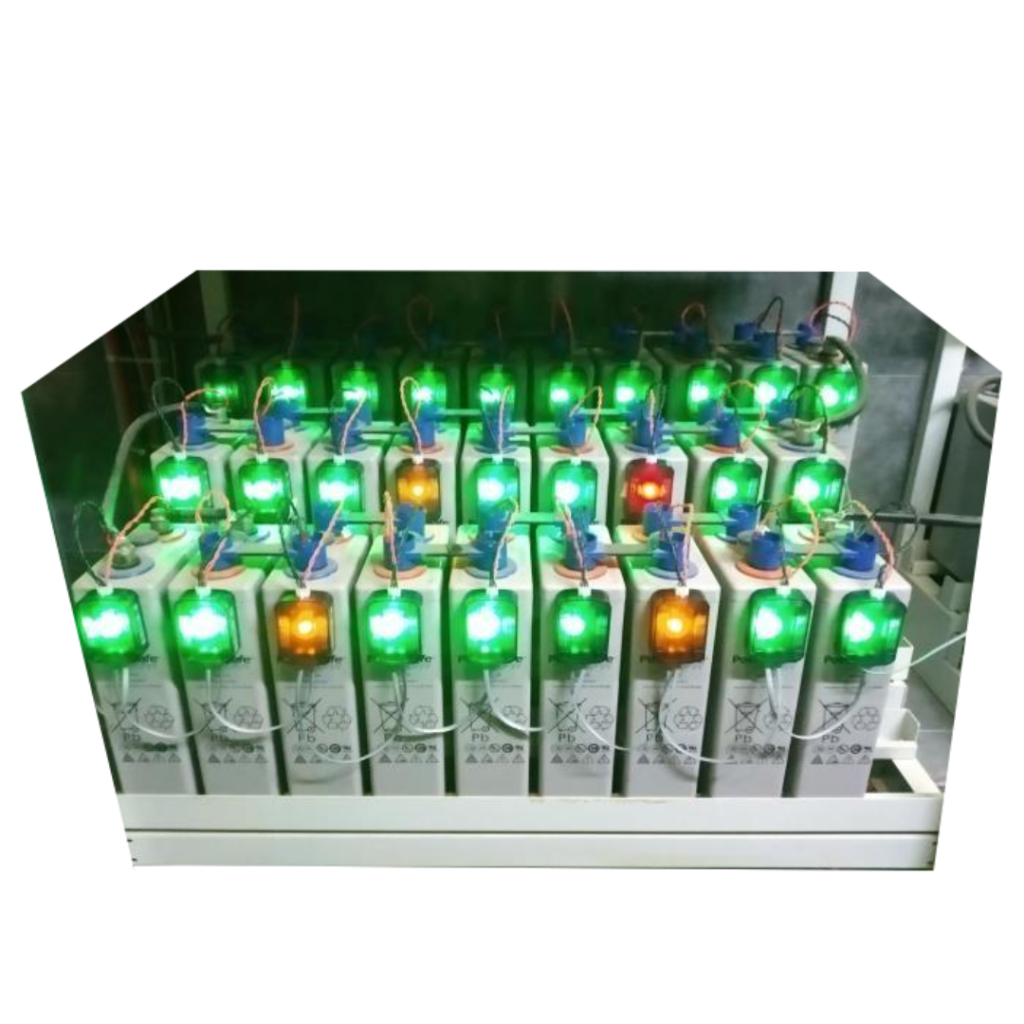
| Category | Specification |
|---|---|
| Monitoring Range | 24V – 360V DC systems |
| Cell Monitoring | Voltage Accuracy: ±0.05%, resolution 1 mV (BATMOD) Internal Resistance: 0.1–64 mΩ, resolution 1 µΩ, accuracy ±2% |
| String Monitoring | Voltage: Up to 2500V DC, resolution 10 mV, accuracy ±0.1% Current: Up to 500A (Hall effect sensors), resolution 10 mA, accuracy ±1% |
| Environmental | Temperature: –10 °C to +100 °C, resolution 0.1 °C, accuracy ±2% Humidity: 5–90% RH, resolution 1%, accuracy ±5% |
| Analytics | SOC/SOH Estimation: 0–100%, resolution 1%, accuracy ±5% (optional) |
| Communication | RS-485 Modbus RTU, Ethernet (TCP/IP), optional Wi-Fi/GPRS |
| Protection Features | Internal short-circuit fuses, reverse polarity protection (BATMOD) |
| Operating Conditions | –10 °C to +70 °C; relative humidity 5–90% RH; 80–110 kPa |
| Power & Enclosure | BATMOD: 10–50 mA STRMOD: 100 mA CONMOD: 12VDC / 20W Enclosures: ABS / Metal |
Predictive Insight for Your Battery Bank
At Chhabi Electricals, we understand that your battery bank is the last line of defense during a power outage. Our BHMS (Battery Health Monitoring System) converts it from a passive backup into a fully managed, predictable asset — extending its operational life, preventing costly failures, and ensuring your critical systems stay protected.
BHMS provides cell-level visibility into voltage, internal resistance, temperature, and battery condition, helping critical facilities detect degradation early and plan maintenance before battery performance becomes a risk.
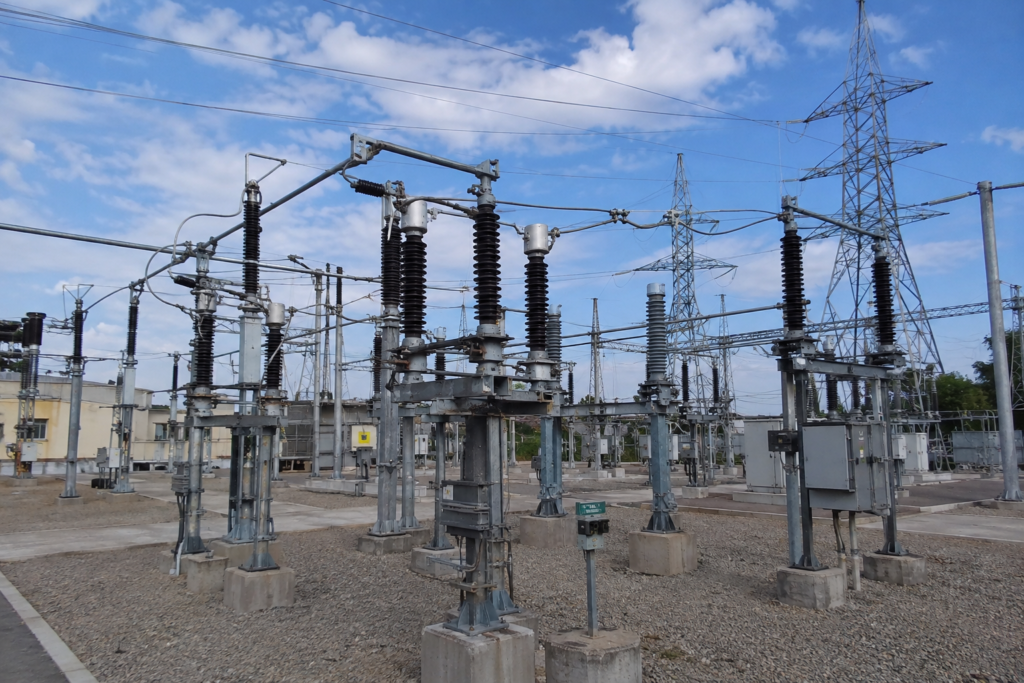
01
Monitors individual cell conditions across substation battery banks to identify abnormal voltage, resistance, or temperature trends before they affect protection and control systems.
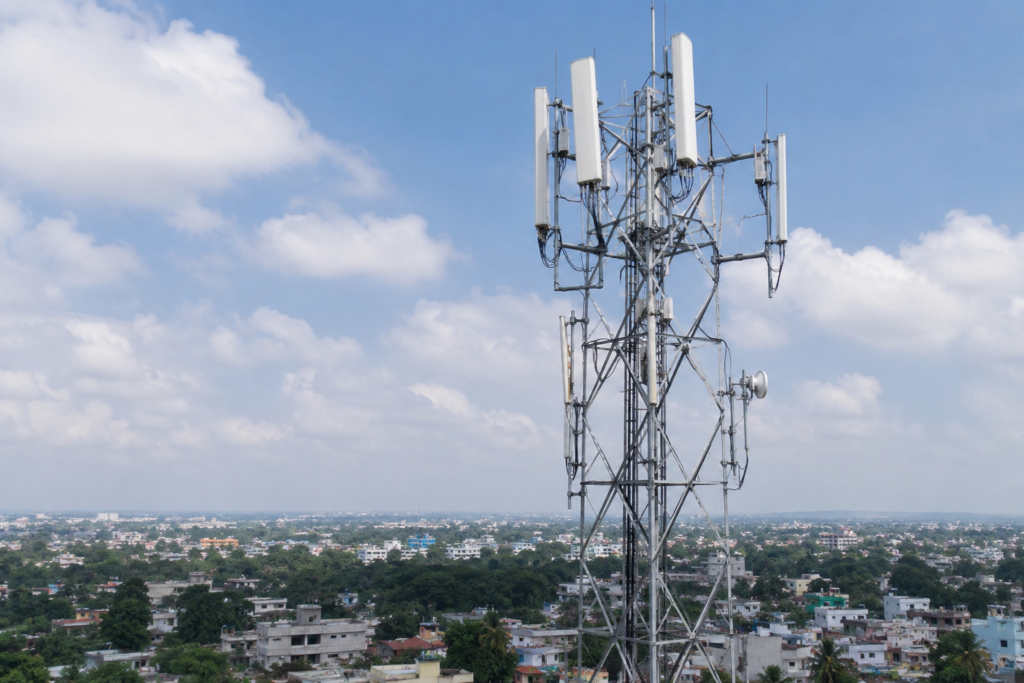
Gives telecom teams visibility into battery condition across remote tower sites, helping identify weak strings remotely and prioritise maintenance before backup performance is compromised.
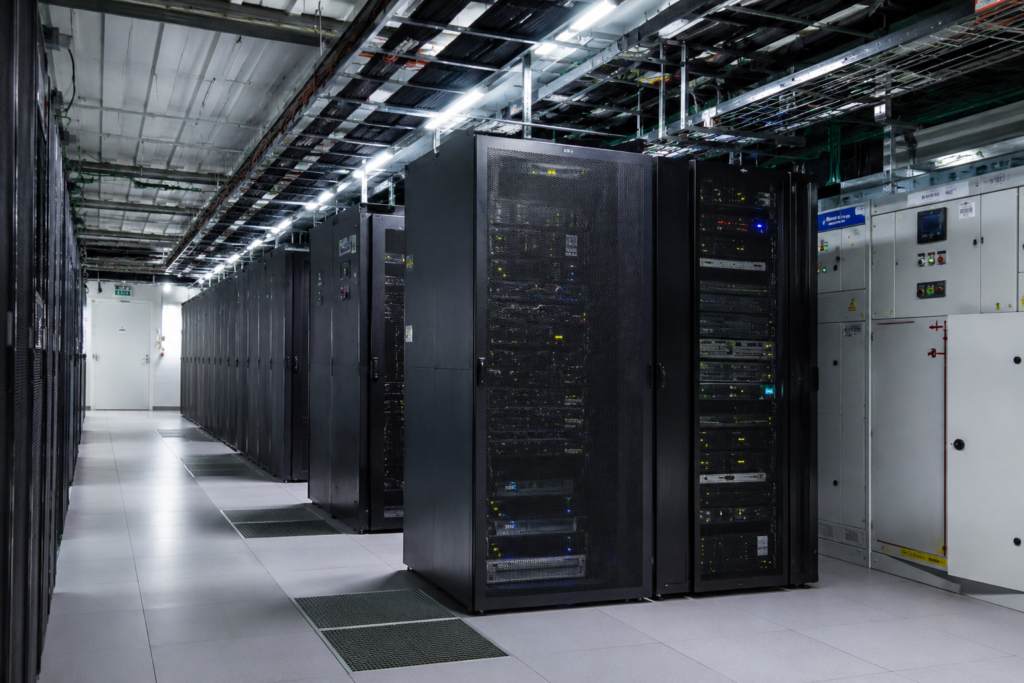
Tracks individual UPS battery parameters and health trends to identify cells showing early degradation, supporting targeted maintenance and more informed battery replacement planning.

04
Connects remote battery systems to utility monitoring platforms through industrial communication interfaces, allowing operators to compare battery health, alarms, and performance trends across multiple sites.
05
Monitors battery banks supporting cold-storage UPS and backup systems, helping facility teams identify declining battery performance before a power interruption threatens temperature-sensitive inventory.

06
Tracks battery cell condition in signalling and communication backup systems, helping maintenance teams detect weak cells early and maintain dependable DC availability for critical railway infrastructure.
Track 1.2V, 2V, and 12V cells, string currents, and ambient conditions.
Internal resistance, cycle count, SOH & SOC analysis.
Modbus RTU/TCP integration with automated alarms (email/SMS).
Capture and analyze historical charge/discharge, voltage/temperature trends, and faults.
BATMOD, STRMOD, and CONMOD modules for flexible expansion.
Up to 2000 V via opto-isolation for high-voltage safety.



A battery health monitoring system continuously tracks individual cell voltages, internal resistance, temperature, state of charge (SOC), and state of health (SOH) across the entire battery bank. It turns what's usually a passive backup asset into something you can actually manage and predict.
Up to 480 cells per string, covering 24V to 360V DC systems. The modular architecture — BATMOD, STRMOD, and CONMOD — allows the system to scale as your battery bank grows without replacing the core setup.
RS-485 Modbus RTU and Ethernet TCP/IP are standard, with optional Wi-Fi and GPRS for remote monitoring. This makes integration with existing SCADA, BMS, or plant control systems straightforward in most industrial setups.
Cell voltage accuracy is ±0.05% with 1mV resolution — precise enough to detect early-stage cell imbalance that manual checks would completely miss. Internal resistance measurement goes down to 1µΩ resolution, which is where real degradation data lives.
Yes, automated alarms via email and SMS are built in. Chhabi Electricals' BHMS flags anomalies in voltage, temperature, resistance, or charge cycles in real time, so the maintenance team knows about a problem cell well before it affects system performance.
Power plants, substations, data centers, oil & gas facilities, railways, and telecom infrastructure — any sector where the battery bank backs up critical control, protection, or communication systems and failure isn't an acceptable outcome.
Yes, it monitors 1.2V (Ni-Cd), 2V (flooded and VRLA lead-acid), and 12V cells, making it compatible with the full range of battery types used across industrial and utility applications.
By catching imbalanced cells, thermal hotspots, and resistance drift early, the Chhabi Electricals BHMS allows targeted intervention, boosting a weak cell or adjusting charging parameters, before degradation spreads. Most facilities see a measurable extension in overall bank life compared to reactive maintenance.
Yes, with optional Wi-Fi and GPRS connectivity, the system supports full remote monitoring including real-time alerts, historical data access, and trend analysis without needing someone physically present at the battery room.
Chhabi Electricals' battery health monitoring system continuously logs charge/discharge cycles, voltage trends, and resistance data across every cell, giving maintenance teams the data to predict failures and schedule interventions rather than reacting after something goes wrong.