
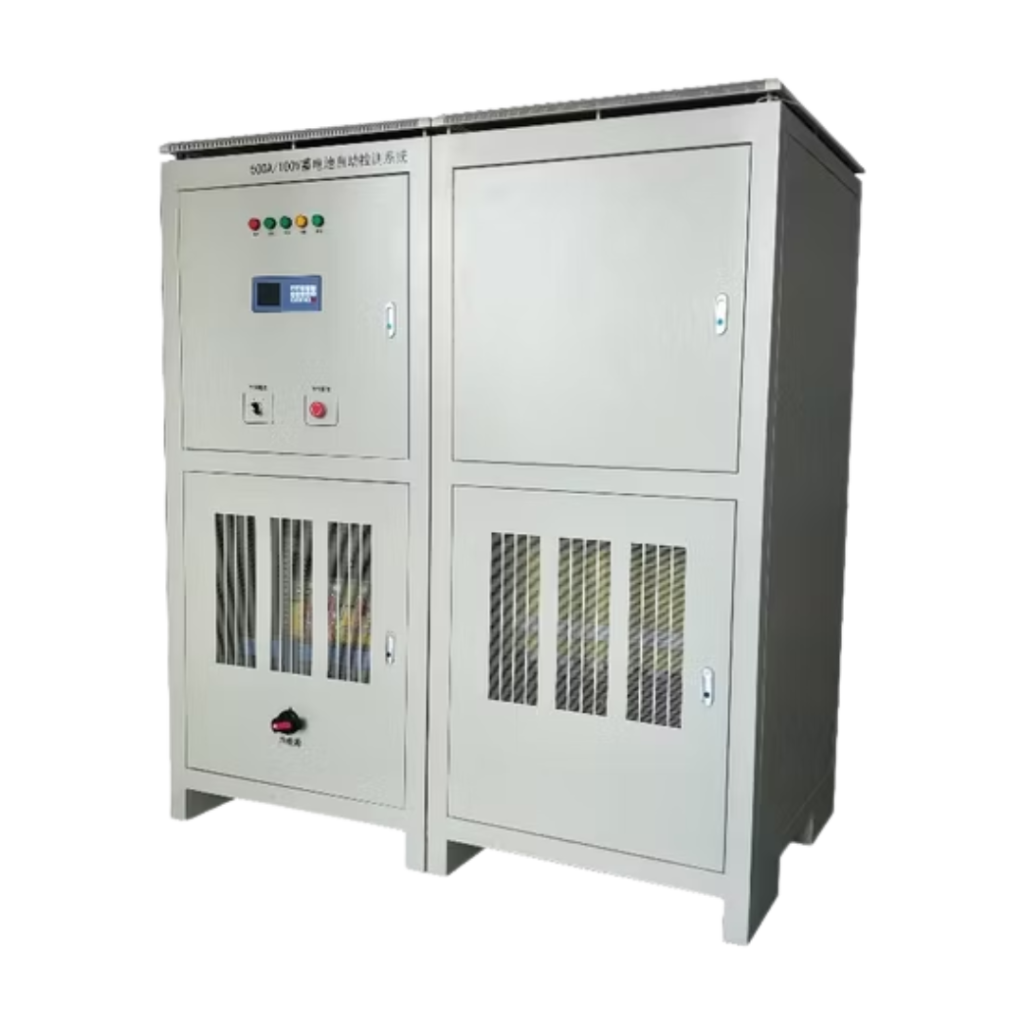
| Specification | Details |
|---|---|
| Type | Resistive (FeCrAl / AISI 304 SS wire) |
| System Voltages | 24V, 48V, 110V, 125V, 220V DC |
| Monitoring | Battery Voltmeter & Ammeter |
| Load Control | Stepwise variation via contactors |
| Cooling | Forced air cooling with redundant fans |
| Enclosure | IP20 (others on request), customizable paint shade |
| Options | Natural cooling, enhanced reporting, custom enclosures |
Reliable Testing for Assured Performance
Batteries kept on float charge can gradually lose capacity, creating a false sense of security. Chhabi’s Battery Dischargers and DC Load Banks provide the means to test, analyze, and condition battery systems, ensuring they can deliver their full rated capacity when required
Used for planned discharge testing where the available battery capacity must be checked against the actual DC load and required backup time. These systems support commissioning, periodic health checks, pre-monsoon testing, and capacity validation across UPS, telecom, railway, utility, and power-generation installations.

01
Controlled discharge testing verifies the actual capacity and backup runtime of UPS battery banks, helping data centres identify battery degradation before it affects critical operations.
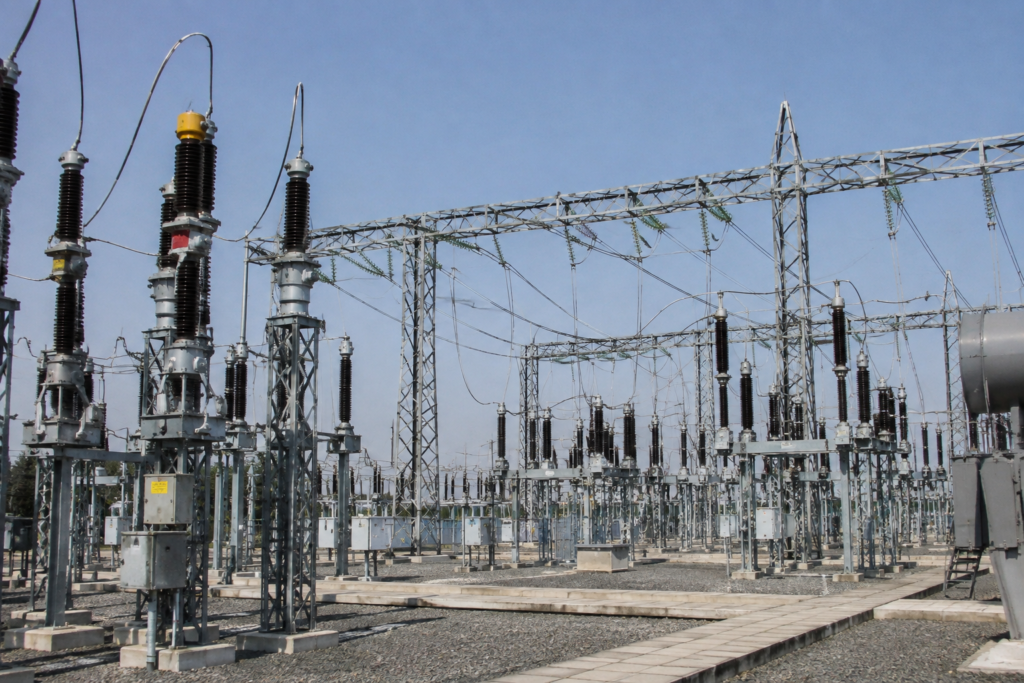
Battery discharge testing confirms whether substation DC banks can support protection, control, and switching systems for the required backup duration during power interruptions.

Controlled discharge testing reveals the actual backup capacity of telecom batteries, helping operators identify weak sites and plan replacements before extended monsoon outages.

A controlled DC load allows industrial UPS systems to be tested at defined load conditions, verifying specified backup performance during commissioning and site acceptance.

Discharge testing verifies the available capacity of battery banks supporting plant protection, control, and emergency systems, helping operators track ageing and plan timely replacement.

Controlled discharge tests verify the condition and available capacity of battery banks supporting signalling and control systems, helping maintain reliable backup during supply interruptions.
Built with FeCrAl or AISI 304 SS resistance elements for repeated use.
Supports 24V, 48V, 110V, 125V, and 220V DC systems.
Multiple resistance steps with contactors for gradual load variation.
Forced air cooling with redundant fans ensures stable performance.
Natural cooling, customized enclosures, and advanced reporting available



Most industrial DC load banks support 24V, 48V, 110V, 125V, and 220V DC systems, covering the full range of substation, telecom, and power plant battery configurations. This makes them practical for facilities operating different battery systems across multiple sites or control rooms. Custom voltage ratings are also available depending on your application.
A DC load bank is a testing device that draws a controlled amount of current from a battery bank to verify whether it can actually deliver its rated capacity. Batteries sitting on float charge for months can silently lose capacity — a DC resistive load bank is the only reliable way to confirm they'll perform when it really matters.
Yes, an AC DC load bank is designed to handle both, making it useful for facilities that run mixed power infrastructure. It gives maintenance teams a single testing solution for UPS systems, battery banks, and generators without needing separate equipment for each.
Most standards recommend a full capacity discharge test at least once a year, with more frequent checks as the battery bank ages. Pairing discharge testing with a Chhabi Electricals Battery Health Monitoring System (BHMS) gives you continuous data between tests so nothing catches you off guard.
Power plants, substations, oil & gas facilities, railways, data centers, and telecom sites, anywhere that depends on a DC battery bank for control, protection, or backup power. For these sectors, skipping periodic load bank testing is simply not an option.
Make sure they understand your system voltage, discharge current, and site conditions — a wrong-sized unit won't give you accurate test results. Chhabi Electricals builds every DC load bank to your exact specs, not a standard catalogue size.
Chhabi Electricals engineers their DC load banks with precision-calibrated load controls, accurate current and voltage monitoring, and stable resistive load elements. This ensures consistent and repeatable discharge test results, giving industries a reliable measure of their battery bank's actual capacity and health under real operating conditions.
Battery banks in power plants back up protection relays and tripping circuits — systems that must respond instantly during a fault. Regular DC load bank testing confirms the batteries are actually ready, not just sitting on float charge and appearing healthy.
Yes, a DC resistive load bank can simulate actual load on a UPS output to verify whether the system holds stable voltage and frequency under stress. It confirms inverter performance, transfer switch response, and overall system behavior under real load conditions before an actual power failure tests it for you.
A well-built industrial DC load bank with quality resistance elements can run hundreds of discharge cycles without needing attention. Chhabi Electricals designs theirs for repeated heavy-duty use, rugged enough for plant environments where testing isn't a once-a-year thing.