
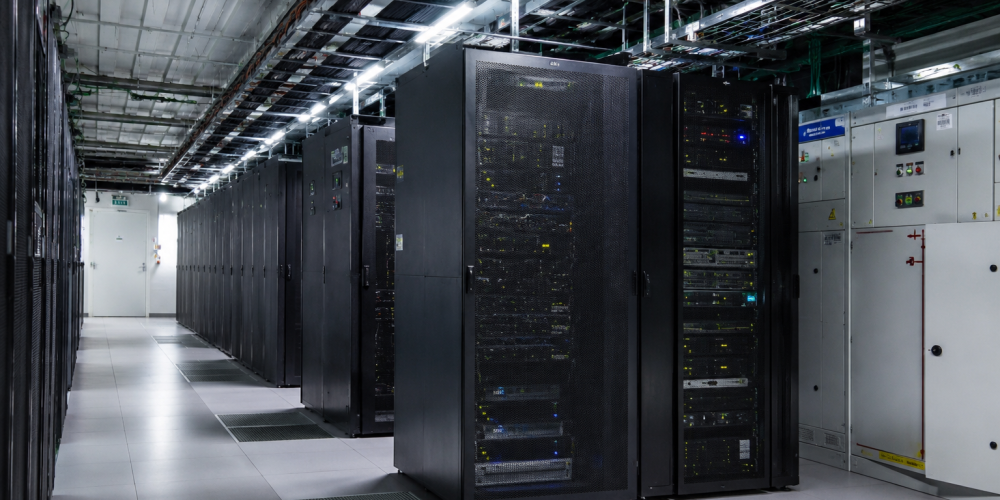
Power solutions designed for high-availability data centre environments.
Modern data centres rely on uninterrupted power to maintain business continuity, protect critical IT infrastructure, and ensure round-the-clock availability of digital services. Every component, from server racks and network equipment to cooling systems, BMS, and DCIM platforms, depends on a stable and monitored power infrastructure. Chhabi Electricals provides engineered DC power solutions designed to support these demanding environments with dependable performance, seamless system integration, and long-term operational reliability.
Modern data centres depend on a tightly coordinated infrastructure where computing, networking, cooling, facility controls, and monitoring systems operate continuously. Maintaining this environment requires an infrastructure approach that can support demanding electrical loads while preserving availability and operational stability.
Critical infrastructure requires dependable power support to maintain essential operations without unnecessary interruption.
Increasing computing capacity and rack density place greater electrical demands on the supporting infrastructure.
Appropriate backup and redundant configurations help reduce the impact of equipment failures, supply interruptions, and planned maintenance.
Stable electrical conditions help protect sensitive IT and electronic systems from voltage variations, transients, and other disturbances.
Monitoring key power parameters, battery condition, alarms, and system status helps teams identify issues and respond effectively.
Infrastructure should provide flexibility for additional equipment, increasing loads, and changing data centre requirements over its operating life.
Reliable power infrastructure is essential to maintain continuous operations across every critical layer of a modern data centre.
Critical IT infrastructure requires uninterrupted DC power to minimise downtime and maintain business continuity.
Continuous monitoring of batteries and power systems helps improve visibility, identify potential issues early, and support proactive maintenance.
Integration with BMS and DCIM platforms enables centralised monitoring and efficient management of critical power infrastructure.
Power systems should be capable of supporting capacity expansion as data centre infrastructure grows.
Dependable backup power helps protect critical equipment during utility failures and planned maintenance activities.
Stable and efficient power distribution supports uninterrupted operation of servers, networking equipment, cooling systems, and other essential infrastructure.

Integrates with BMS and DCIM platforms through Modbus RS-485, TCP/IP, and Profibus, giving operators real-time visibility of battery voltage, current, temperature, and alarms.
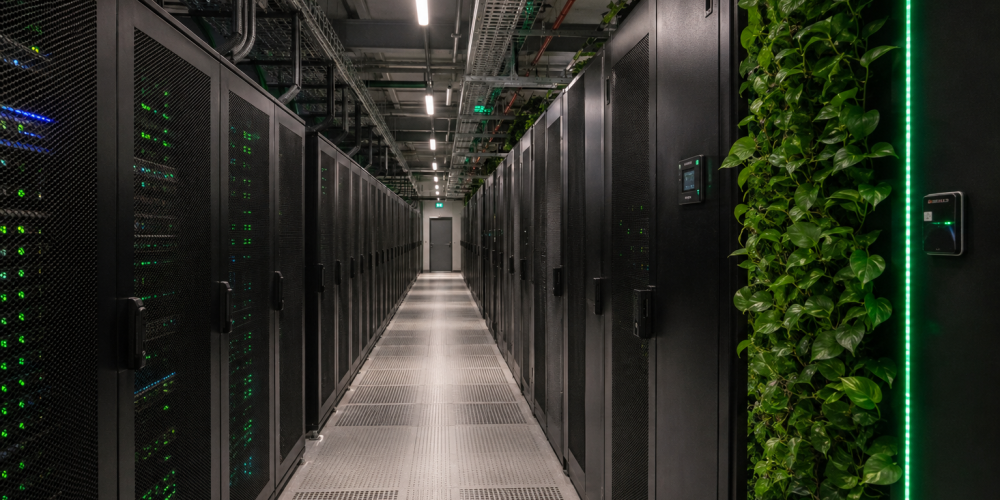
With >0.90 power factor and >90% efficiency, the modular design helps reduce charging losses, while SCADA integration enables battery charging data to be incorporated into energy management and demand-response systems.
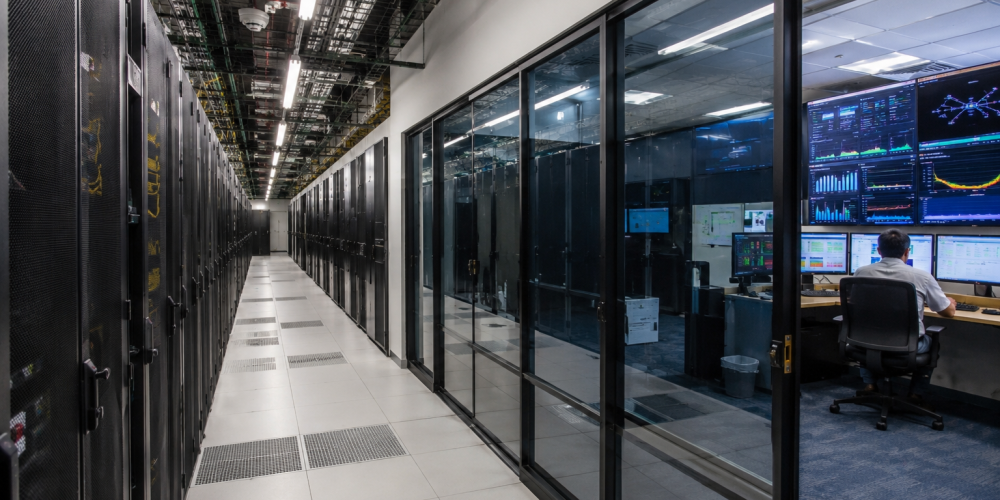
Protects ERP platforms, transaction servers, databases, and network infrastructure from grid disturbances, with online double conversion and SNMP monitoring for real-time UPS visibility.
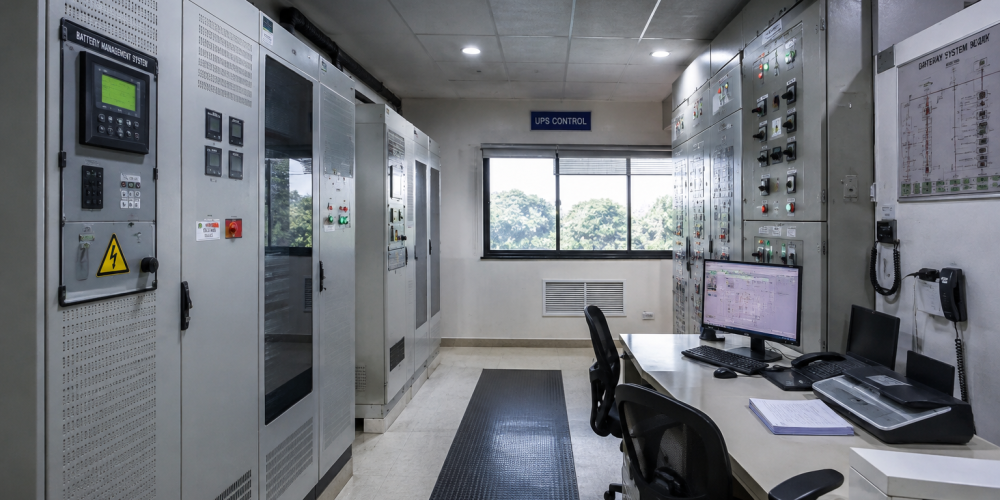
Routes battery-backed DC to control, communication, and emergency circuits through coordinated protection, with individual feeder metering and alarms for immediate fault identification.
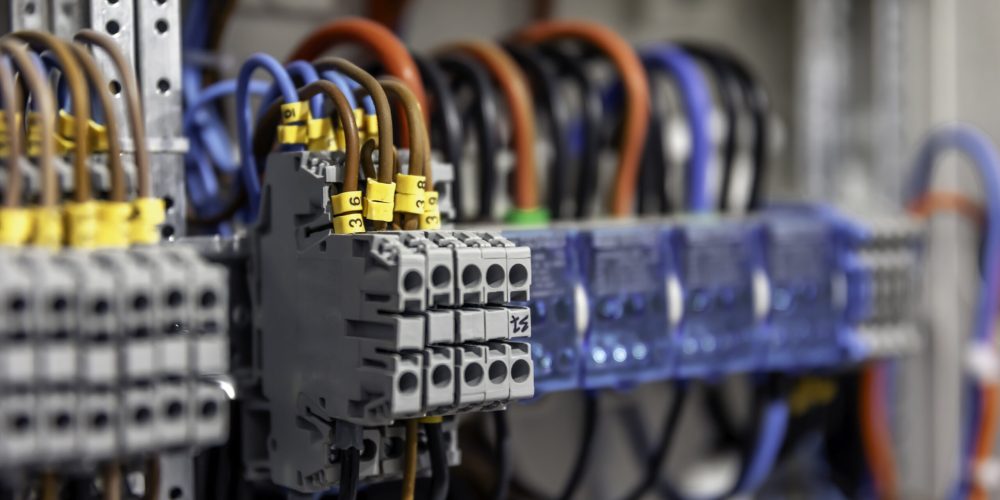
Steel, chemical, cement, automotive, and food-processing plants require coordinated protection across multiple distribution levels. ACBs, MCCBs, and MCBs can be selected according to incomer, feeder, and final-circuit requirements, with adjustable electronic trip settings helping isolate faults without unnecessarily shutting down healthy sections.
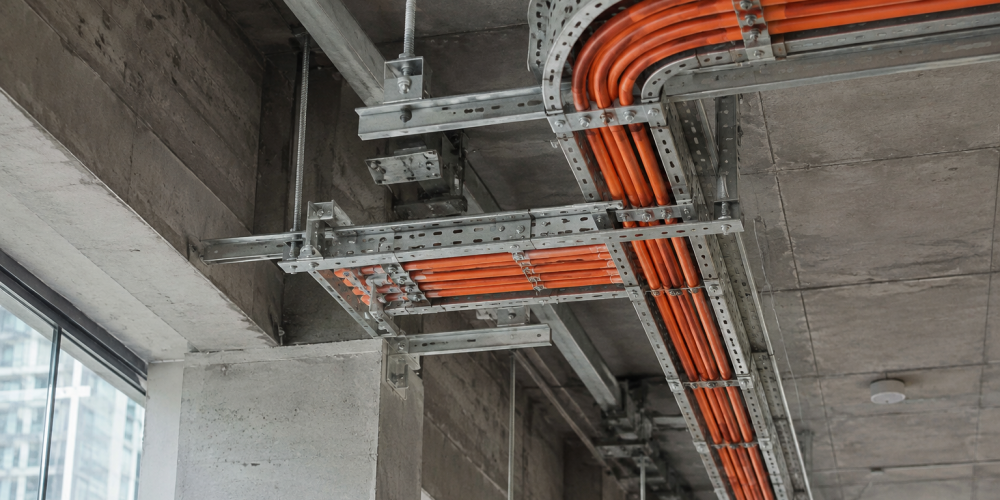
Fire alarm circuits, emergency lighting, fire pumps, staircase pressurisation, and fire-fighting lifts must remain operational during a building fire. Fire-resistant and LSZH cables help maintain circuit integrity while limiting smoke and toxic emissions during evacuation.
Cooling infrastructure operates continuously alongside IT equipment and requires its own electrical capacity to maintain the environmental conditions required inside a data centre.
Large cooling equipment can represent a significant electrical load and needs to be considered during overall power system design.
Pumps, fans and associated mechanical equipment require dependable power to maintain the movement of chilled water or conditioned air.
Cooling demand needs to be considered alongside IT loads and other facility services when planning the data centre’s total electrical capacity.
Data centre power infrastructure is organised across multiple distribution stages, moving electrical power from the incoming source to the equipment that supports IT operations. Each stage has a defined role in delivering power to the required load while maintaining an organised and serviceable electrical architecture.
Receives incoming electrical power and routes it into the facility’s primary electrical infrastructure for further distribution.
Distributes power to major data centre loads, including IT infrastructure, cooling systems and essential facility services.
Dedicated distribution systems route electrical power towards server, storage and networking environments according to their load requirements.
Rack-level distribution delivers power directly to individual IT racks and connected equipment through appropriately configured electrical systems.
Reliable data centre power infrastructure requires more than backup capacity. System architecture, redundancy, power quality, capacity planning, and lifecycle management all influence how effectively critical electrical systems perform over time.
Redundant power paths help maintain supply availability when individual equipment, circuits, or power sources require maintenance or become unavailable.
Voltage stability, transient conditions, harmonics, and other electrical disturbances need to be considered when powering sensitive data centre infrastructure.
Power infrastructure should account for present demand as well as future increases in IT load, rack density, cooling requirements, and facility capacity.
Protection coordination and selective fault isolation help limit the impact of electrical faults and prevent unnecessary disruption to healthy sections of the system.
Battery performance can change over time, making condition monitoring, testing, and timely replacement important for maintaining dependable backup capability.
Regular inspection, testing, and servicing help identify developing issues early and support reliable operation throughout the power system lifecycle.
Engineered DC power solutions designed for high-availability data centre environments.
Designed to support critical infrastructure with uninterrupted power availability.
Seamlessly integrates with Building Management Systems (BMS) and Data Centre Infrastructure Management (DCIM) platforms.
Enables real-time monitoring of power systems for improved visibility and operational control.
Flexible solutions designed to support expanding data centre capacity and future infrastructure needs.
Built for consistent performance and dependable operation in mission-critical data centre environments.
Data centres run critical IT and facility systems continuously, so a power interruption can affect service availability and business operations. A properly designed power infrastructure helps maintain supply continuity and reduces the impact of electrical failures.
Design should consider load requirements, redundancy, power quality, backup capacity, fault protection, monitoring, maintenance and future expansion. These factors need to work together rather than being planned independently.
Sensitive electronic equipment can be affected by voltage variations, transients, harmonics and other electrical disturbances. Maintaining suitable power quality helps support stable operation and reduces electrical stress on connected infrastructure.
Battery systems provide stored energy for critical DC loads when the normal power source is unavailable. Their effectiveness depends on appropriate sizing, charging, monitoring and regular assessment of battery condition.
Chhabi Electricals provides engineered DC power solutions for high-availability environments, with attention to system reliability, monitoring, integration and long-term operational requirements. Solutions can be configured according to the electrical and backup requirements of the facility.